
Eat Play Sleep Routine: What It Is and How to Start (0–6 Months)

You're doing everything you can.
You're feeding your baby. You're watching for tired cues. You're trying to get them down for naps.
But sleep still feels unpredictable.
Some naps are 20 minutes. Some are longer. Nights are all over the place. And you're spending half your day trying to figure out what your baby needs.
Here's what most people don't tell you:
It's not what you're doing. It's the order you're doing it in.
Because the sequence of your baby's day — eat, then play, then sleep — is one of the most powerful things you can do to support longer naps, better nights, and a baby who actually knows what's coming next.
This is the Eat Play Sleep routine. And once you understand why it works, you can't unsee it.
What You'll Learn
In this guide, you'll learn:
- what the Eat Play Sleep routine is and why the order matters
- how it supports longer naps and better night sleep
- how to apply it from birth through 6 months
- the one exception that changes at bedtime
- the most common mistakes and how to avoid them
What Is the Eat Play Sleep Routine?

Eat Play Sleep is a daily rhythm for babies based on a simple, repeating cycle:
Feed → Active awake time → Sleep
Then repeat.
Instead of feeding your baby to sleep — which is the default most parents fall into — you feed them at the start of the wake window, give them time to be awake and engaged, and then put them down for sleep when their wake window is ending and sleep pressure has built naturally.
The sequence sounds almost too simple.
But it works because it works with your baby's biology, not against it.
Why the Order Matters So Much

Most parents accidentally teach their baby to associate feeding with falling asleep.
It makes complete sense. A newborn feeds, gets warm and full, gets drowsy, falls asleep. It happens naturally, and it feels like it's working.
Until it doesn't.
Because when feeding becomes the thing that causes sleep, your baby can no longer fall asleep without it. Every time they surface between sleep cycles — which happens every 45 to 60 minutes all night — they need to feed again to get back down.
That's not a hunger problem. That's a sleep association problem.
🧬 Mini science note: Sleep associations form when the brain consistently links falling asleep to a specific stimulus. When a baby falls asleep feeding, the brain maps: feeding = sleep onset. Each partial awakening between sleep cycles triggers a search for that same stimulus. This is why babies who are fed to sleep often wake multiple times overnight even when they're developmentally capable of longer stretches — they're not waking from hunger, they're waking because the sleep-onset cue is missing.
The Eat Play Sleep sequence breaks this pattern cleanly.
Feed happens at the beginning of the wake window, when your baby is alert and able to take a full feed. Play happens next. Sleep comes after — without a feed immediately before it. Your baby learns to fall asleep based on sleep pressure and routine, not based on feeding.
The result: naps that are longer, nights that consolidate, and a baby who can connect sleep cycles without needing you to intervene every time.
The Full Feed Piece: Why It's Non-Negotiable
One of the most important things Eat Play Sleep does is encourage full, efficient feeds.
When babies feed to sleep, they often don't feed well. They get drowsy partway through, take in less milk or formula than they need, and then wake up hungry sooner than they should — which shortens naps and increases night wakings.
When you feed at the start of the wake window — when your baby is properly awake and alert — they feed better. They take more. They stay full longer. Sleep pressure builds across the awake period. And when they go down, they go down well.
Full feeds during the day are also what reduce night feeds over time. A baby who is getting adequate milk intake across structured daytime feeds has less physiological need to feed overnight.
This is one of the clearest examples of how the structure of the day directly shapes the quality of the night.
How to Apply Eat Play Sleep (0–6 Months)
The rhythm looks similar across the early months, but the timing shifts as your baby's wake windows lengthen.
0–6 Weeks: Keep It Gentle
In the first weeks, your baby's wake windows are very short — often just 45 to 60 minutes from the time they wake up. There is not a lot of "play" time at this stage. But the principle still applies.
Feed your baby when they wake — not to settle them back to sleep.
Awake time might just be a nappy change, a little eye contact, some gentle talking, tummy time for a few minutes. Then back down for sleep.
You're not forcing a rigid schedule at this point. You're planting the seed of the right sequence.
The goal in these early weeks is simply: feed at the start of the wake window, not at the end of it.
6–12 Weeks: The Rhythm Starts to Form
By 6 weeks, wake windows typically extend to 60–90 minutes and circadian rhythm begins developing. This is where the Eat Play Sleep sequence starts having a real, noticeable impact.
A typical cycle at this stage looks like:
Wake up → Feed (full feed, baby alert and engaged) → Awake time (20–40 minutes: tummy time, talking, looking around) → Wind down → Sleep
The awake period is still short, but it's meaningful. Your baby is watching your face, responding to your voice, building the neurological associations between daytime light and activity.
Keep stimulation calm and natural. There's no need for toys with flashing lights or loud sounds. Eye contact, talking, gentle movement, natural daylight — these are all the stimulation a baby this age needs.
3–4 Months: Sleep Maturing, Routine Matters More
This is a pivotal stage.
Sleep cycles are maturing at 3–4 months, which means the 45-minute nap intruder hits many babies hard. Wake windows are now around 75–110 minutes. There is now a genuine stretch of engaged awake time between the feed and sleep.
A typical cycle looks like:
Wake up → Feed → 45–60 minutes of awake time (floor play, tummy time, interaction) → Wind down cues → Sleep
This is the stage where parents who have been accidentally feeding to sleep often notice problems compounding. The 3–4 month sleep regression — which is actually a neurological maturation, not a regression — tends to magnify whatever sleep associations are already in place.
If you're reading this at 3–4 months and feeding to sleep has been your approach, this is the ideal time to shift. The Eat Play Sleep rhythm gives you a clean framework to work from.
4–6 Months: Structure Pays Off
By 4–6 months, wake windows are typically 1.75–2.25 hours. The awake period is now long enough for real play, social engagement, and physical activity.
A typical cycle:
Wake up → Feed → 60–90 minutes of awake time → Wind down → Sleep
Babies at this stage are alert, interactive, and beginning to show clear readiness-for-sleep cues — rubbing eyes, quieting, losing interest in play. These cues become more readable when you're working within the right wake window range.
If wake windows and Eat Play Sleep are aligned at this stage, many babies begin consolidating naps into longer stretches and night sleep starts to lengthen meaningfully.
This is also the stage where the difference between a structured day and an unstructured one becomes most obvious. Babies on a predictable rhythm settle faster, sleep longer, and are calmer during awake time — because their nervous system knows what's coming.
The Bedtime Exception
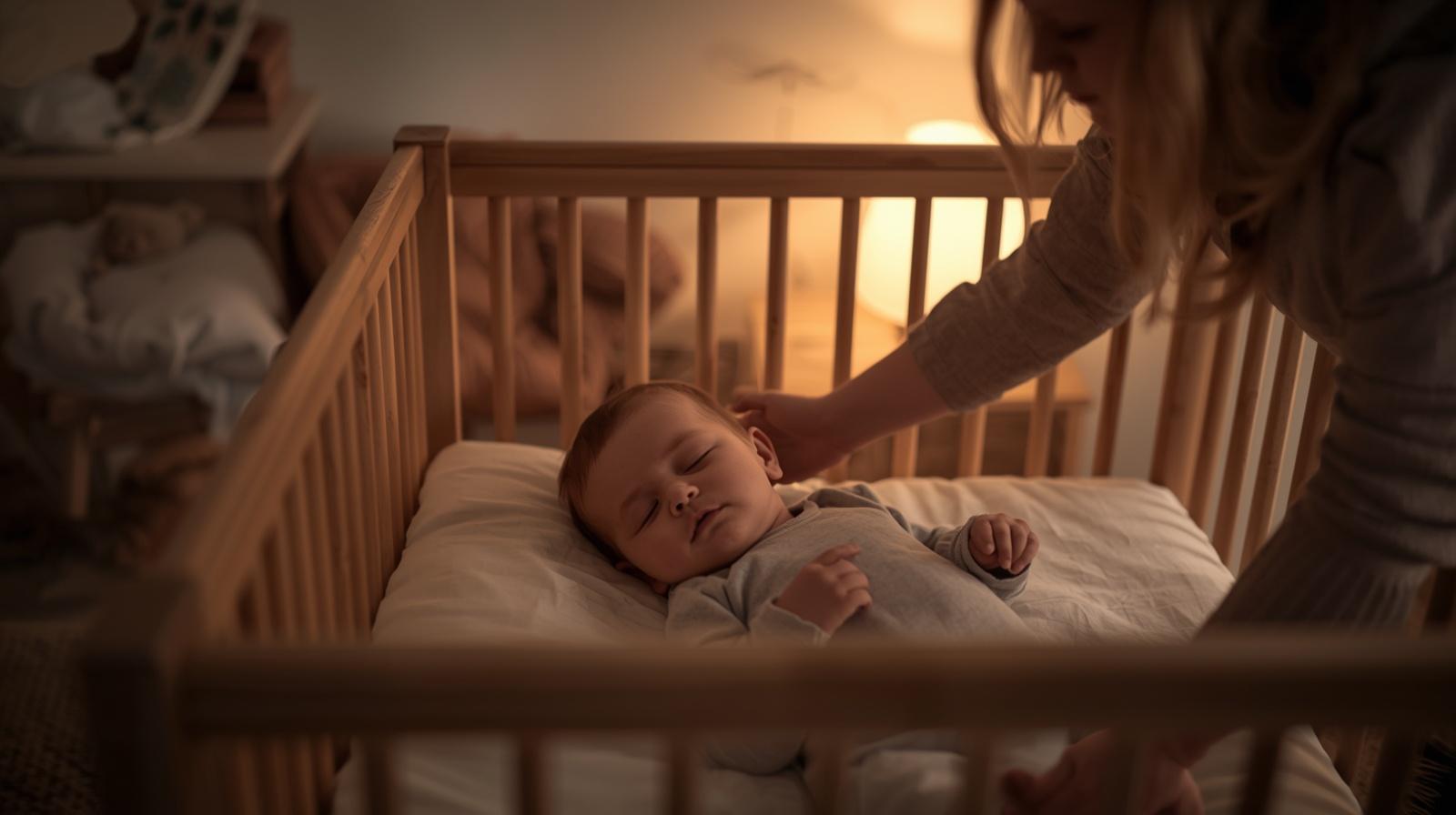
There is one part of the day where the sequence shifts — and it's important to understand why.
At bedtime, the order becomes: Feed → Wind down → Sleep
You still feed your baby as part of the bedtime routine. But at bedtime, unlike during the day, the feed comes toward the end of the routine — after the bath, after the massage — and is followed by a calm transition before the crib.
The key is that your baby does not fall asleep on the feed. They finish feeding, have a short wind-down, and go into the crib drowsy but still awake.
This is a different sequence from daytime Eat Play Sleep, but it serves the same principle: the feed is not the sleep-onset trigger.
If you want the full breakdown of how to structure the evening, this article covers it step by step → Bedtime Routine for Babies: How to Create One That Actually Works
What About Solids? (From 4–6 Months)
Many babies are developmentally ready for solids from around 4 months, and research supports starting between 4 and 6 months for babies who show readiness cues — good head control, interest in food, ability to sit with support. Six months is the upper end, not the target.
When solids are introduced, the Eat Play Sleep structure accommodates them naturally. Milk remains the primary nutrition source at this stage, and solids are exploratory and supplementary.
The key timing principle: leave approximately one hour between the milk feed and the solid meal. You want your baby to have built some appetite — but not be so hungry that the meal becomes stressful and chaotic. Solids land best in the middle of the awake window, when your baby is alert, interested, and not running on an empty or over-full stomach.
A typical structure with solids looks like:
Wake up → Milk feed → Play/awake time (~1 hour) → Solids → Continue play → Wind down → Sleep
Keep solids firmly within the awake period — never right before sleep.
The Most Common Eat Play Sleep Mistakes

Feeding right before sleep "just this once"
This is how feeding-to-sleep creeps back in.
One feed before a nap because your baby is unsettled. Then twice. Then it becomes the default again.
Consistency is what makes the sequence work. The occasional exception won't unravel weeks of progress, but a pattern of exceptions will. Stay with the structure.
Not giving a full feed at the start
If your baby only takes a partial feed and you try to move on to play, they'll likely be unsettled, won't engage well in awake time, and will signal for another feed before sleep is due.
Make sure the feed at the start of the wake window is full and efficient. If your baby is distracted or fussy during a feed, it's worth pausing and trying again — not moving on with a partial feed.
Trying to force the sequence on a too-short wake window
If your baby's wake window is 60 minutes and you're trying to fit a feed, 40 minutes of play, and a wind-down in, you'll push past the window and end up with an overtired baby who's harder to settle.
Know your wake windows. The sequence fits within the window — it doesn't extend it.
→ Baby Wake Windows by Age (0–12 Months)
Starting the cycle after a night feed
In the early weeks, if your baby wakes at 2 AM for a genuine night feed, you feed them and put them straight back down. You do not start an Eat Play Sleep cycle at 2 AM.
Night feeds are feeds. They are not the start of a wake window.
The Eat Play Sleep rhythm applies to the day. Once your baby is back in their sleep environment after a night feed, the goal is sleep — not play.
Thinking short naps mean the routine isn't working
In the early weeks and months, short naps are developmentally normal.
Eat Play Sleep is not a magic fix for the 30-minute nap — it is a foundation that supports sleep consolidation over time. Some babies consolidate naps quickly. Others take longer. What you are building is a system, not a one-night solution.
Stay consistent. The results compound.
Why This Matters for Night Sleep
Everything about the Eat Play Sleep routine ultimately serves one goal: better nights.
When your baby is fed well during the day, their overnight caloric needs reduce. When they fall asleep without a feeding association, they can connect sleep cycles independently. When their wake windows are respected, sleep pressure builds correctly and nights consolidate naturally.
Night sleep is the output of how the day is structured.
This is not about luck. It is not about having an "easy baby." It is about building a day that works with your baby's biology so that nights take care of themselves.
→ Why Your Baby Wakes at Night (and How to Fix It)
Free guide
Want your baby sleeping 12 hours a night?
Download my free guide — the simple structure I used to help my son sleep longer, nap better, and eat well during the day. No cry-it-out. No rigid schedules.
Get the free guide →Common Questions About Eat Play Sleep
Can I start Eat Play Sleep from birth?
Yes — and I highly encourage it. You won't have a rigid schedule in the early weeks, but establishing the principle of feeding at the start of the wake window (rather than to induce sleep) from the beginning makes everything easier as your baby grows.
What if my baby falls asleep during a feed?
This is very common in the newborn stage. Try to keep them awake through the feed with gentle stimulation — a cool cloth, skin contact, undressing them slightly. If they do fall asleep during the feed, don't panic. Gently pick them up and rouse them slightly before putting them down, so they're not in a deep sleep-associated state when they hit the crib. Over time, as feeds become more efficient and wake windows lengthen, this becomes less of an issue.
What if my baby is hungry before the wake window ends?
In the early weeks, always feed a hungry baby. The structure is a guide, not a rule to override genuine hunger. If your baby is consistently hungry before the wake window ends, it may be a sign that the previous feed wasn't full enough — focus on feed quality first.
Does Eat Play Sleep work with breastfeeding?
Yes. The principle applies regardless of whether you're breastfeeding or formula feeding. The key is the same: feed at wake-up, allow awake time, then sleep — rather than using the feed as the sleep-onset mechanism.
Does Eat Play Sleep work with twins?
Yes, and for twins it's especially valuable because it gives you a predictable framework to sync their schedules. Feeding both babies at the start of the wake window — simultaneously where possible — and then having parallel awake and sleep windows makes the day manageable in a way that a demand-led approach rarely does.
When does Eat Play Sleep stop working?
It doesn't stop — it evolves. As your baby grows, wake windows lengthen, naps reduce, and eventually the daytime sleep drops away entirely. But the core principle of the day being structured, predictable, and feeding-independent-from-sleep continues to support good sleep well beyond infancy.
Travelling with your baby?
The Eat Play Sleep rhythm doesn't stay home.
When your baby's day is built around a predictable sequence rather than a fixed location, the structure travels with them. I've taken my son on long-haul flights and across multiple time zones and he adjusted within two to three days every time. I cover the full strategy inside.
Get the Baby Travel Sleep Guide →The Bigger Picture
The Eat Play Sleep routine is not a trick.
It is not a sleep training method.
It is not a rigid schedule that asks you to ignore your baby's cues.
It is a biological framework that works with how your baby's brain and body actually function — one that gives you a structure to work from so that every day is less guesswork and every night has a better chance of being longer than the one before.
My son was sleeping 12 hours at night with just one night feed by 6 weeks. By 5.5 months, he was sleeping 12 uninterrupted hours.
Not because he was an easy baby.
Because his day was structured in a way that made sleep inevitable.
Calm days and 12-hour nights don't happen by chance. They happen when the sequence is right.
Want the foundation that makes everything easier?
The Baby Sleep Blueprint is the complete system — wake windows, nap timing, feeding rhythm, bedtime routine — all working together. Age by age, week by week.
Get instant access → 14-day money-back guarantee · Lifetime access · Start tonight